laboratoire écologie et art pour une société en transition
d’un champ à l’autre / von Feld zu Feld
d’un champ à l’autre / von Feld zu Feld (from one field to the next) is a curatorial, experimental, and nomadic art project run by collectif Facteur and least in different parts of the Valais.
A unit of land management in agricultural practice, the “field” is characterised by its permeability between the interior and exterior. It maintains a dynamic relationship with its environment by exerting an influence on it, but at the same time depends on external factors, such as its maintenance or abandonment. Similarly, in physics, the term “field” (electrical, magnetic, etc.) is fundamental to the interaction between bodies and natural forces. Finally, the term also has another meaning: it refers to the different disciplines of knowledge.
Moving “from one field to the next” is a way of forging links between the separate units – the fields – on which we work with local communities. Initial “fields of action” unfolded in the Binn Valley, where co-creative initiatives, interweaving artistic and curatorial practices, research, and environmental concerns within situated contexts, offered a fertile ground for experimentation, while establishing a methodological and conceptual framework. In a second phase, new “fields of action” take shape around the notion of ruins, understood not only as vestige, or as a collapsed or abandoned building, but also as a generative material for the imagination, an open space where new forms of life, thought and community may emerge.
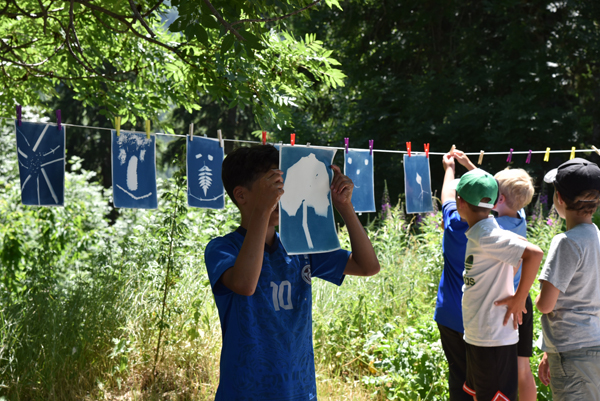
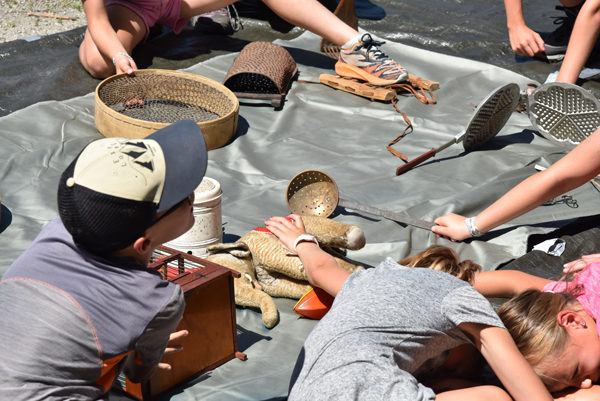
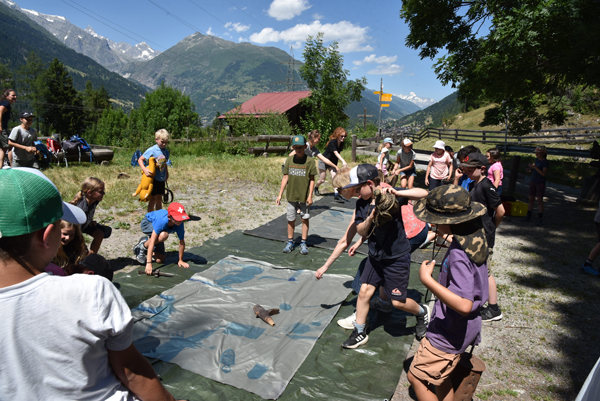
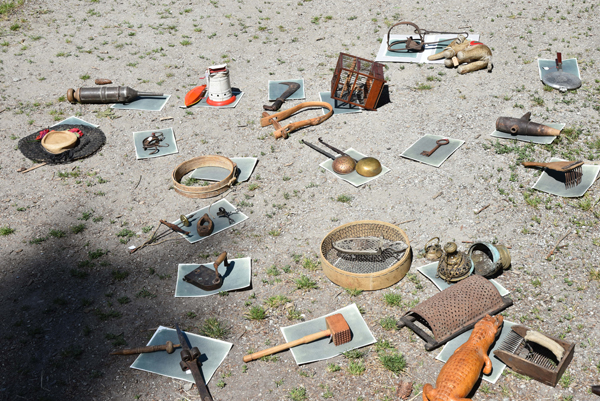

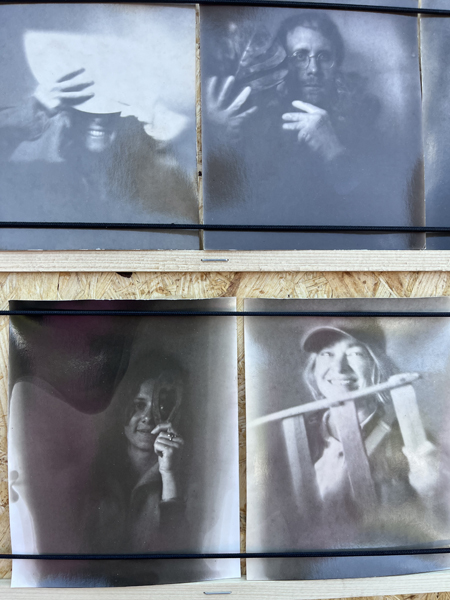
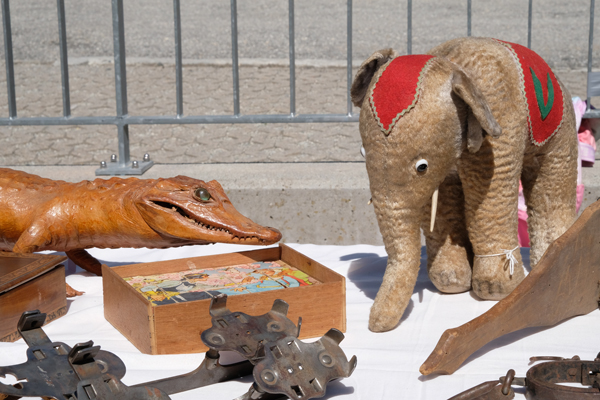
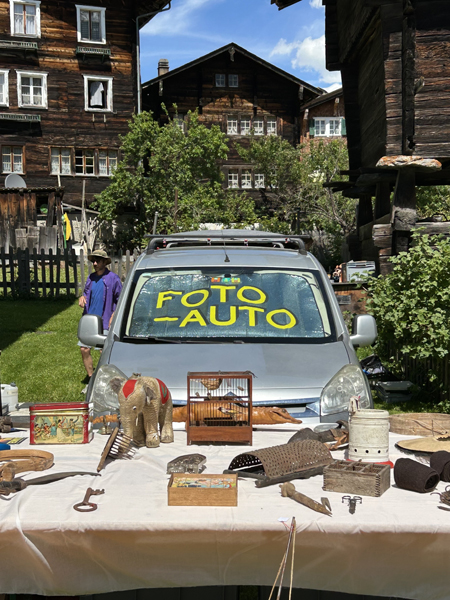
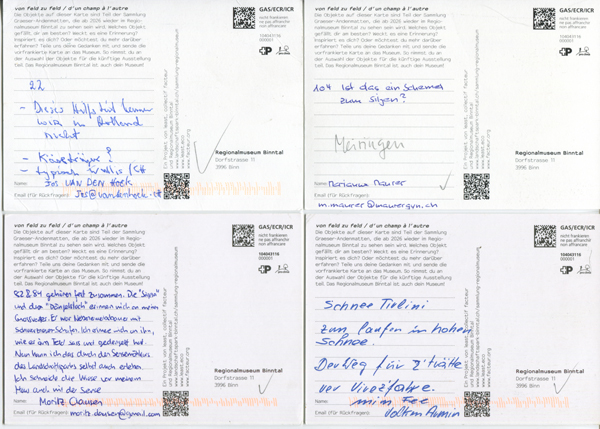
what we’ve done
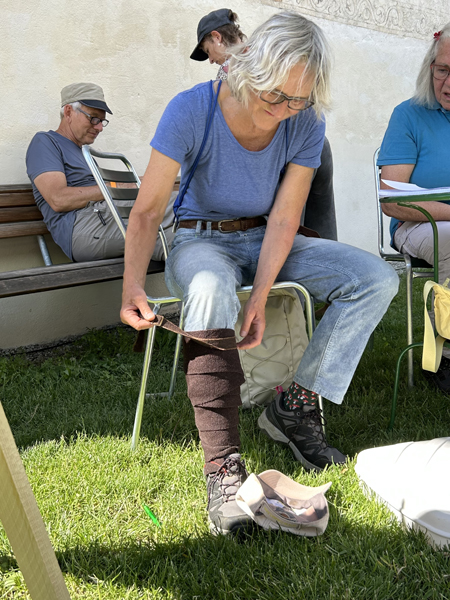
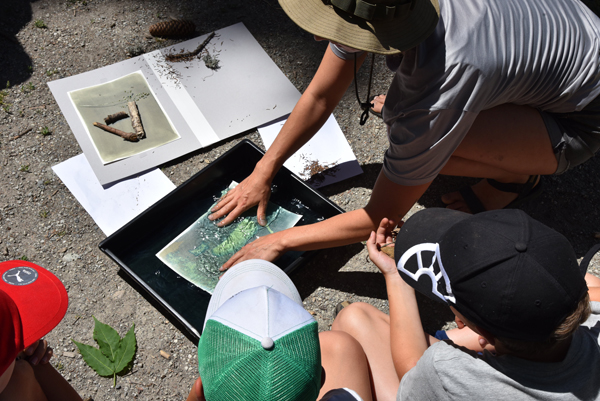
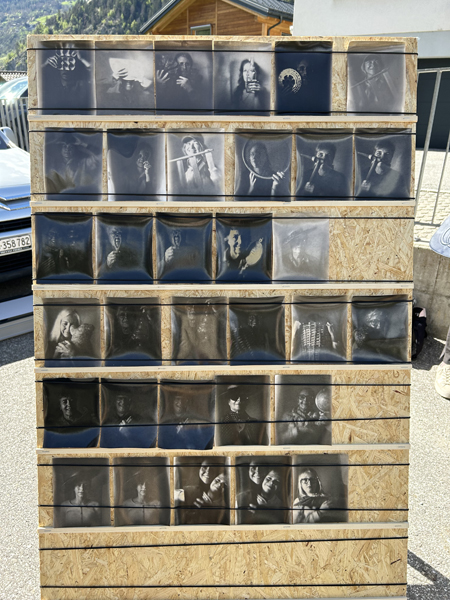
Between 2023 and 2024, least and the collectif Facteur conducted Arpentage, a research project based in Valais, in the Binn and Entremont valleys, in dialogue with residents, academics, activists, and institutions. These stories and testimonies fed into the project d’un champ à l’autre / von Feld zu Feld.
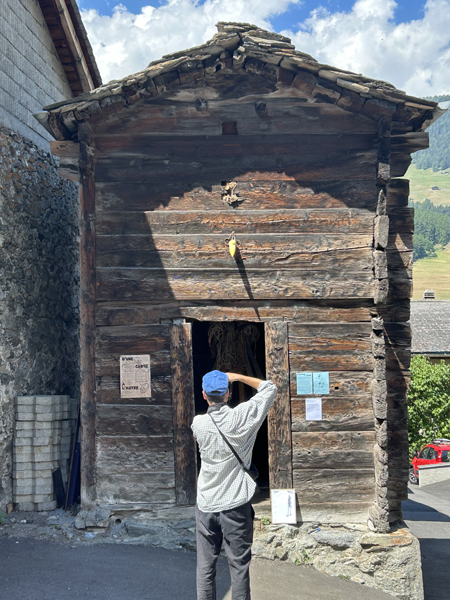
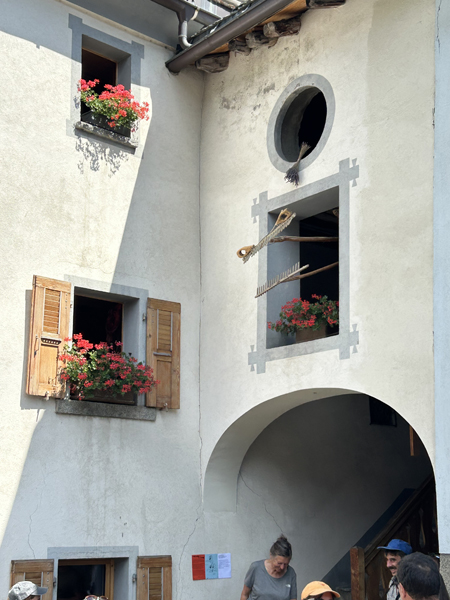
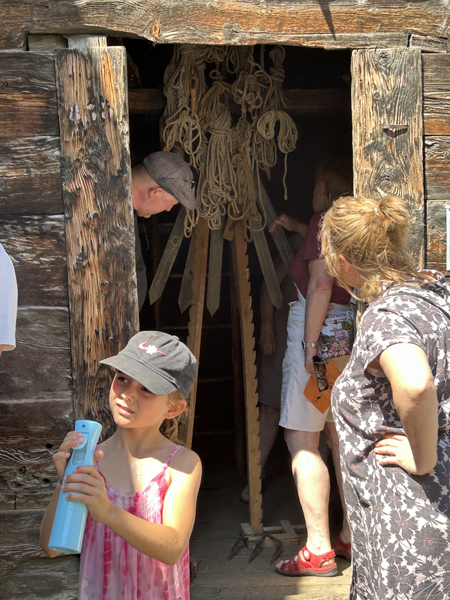
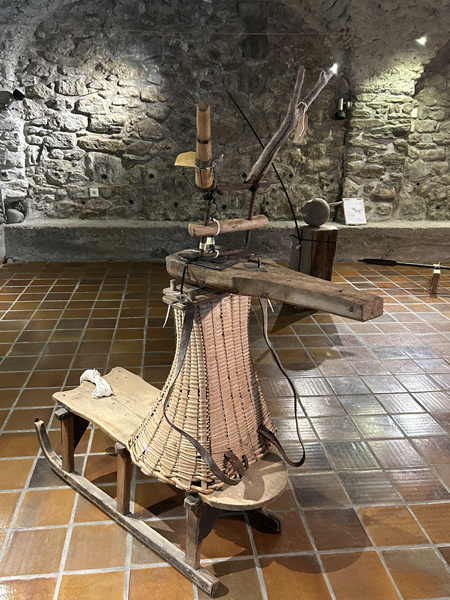
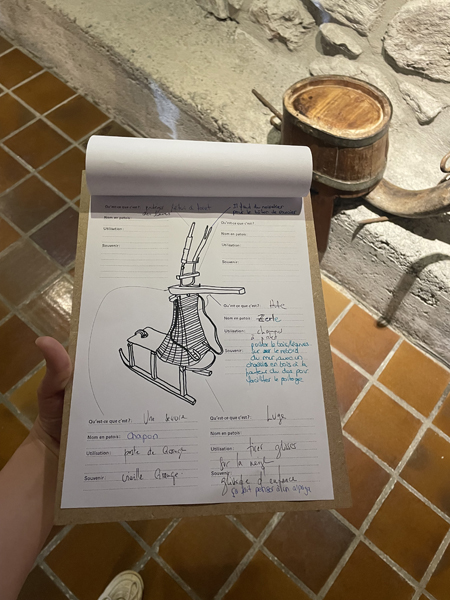
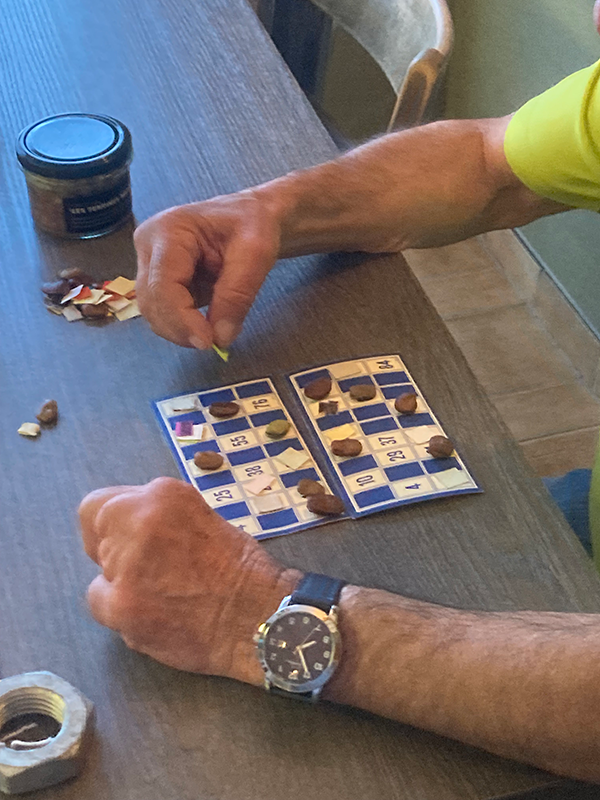
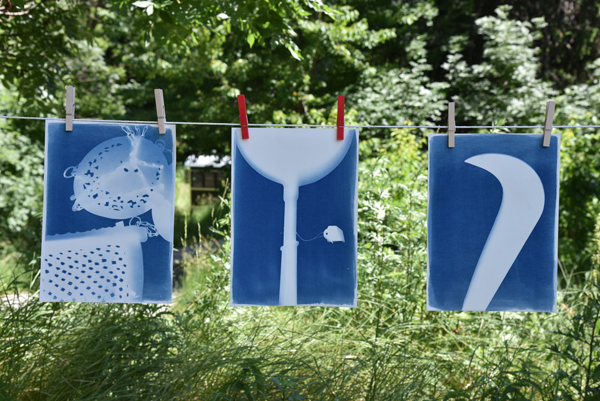
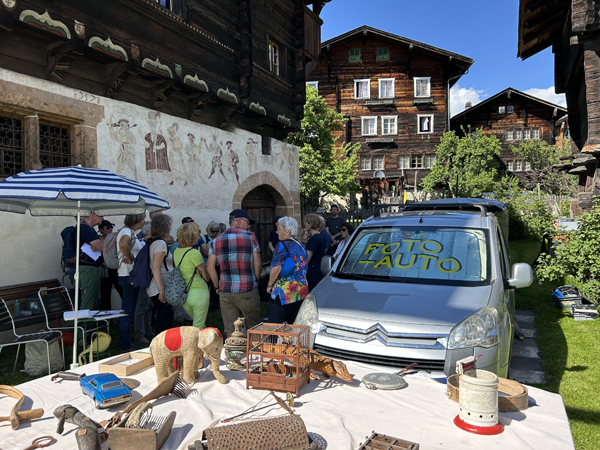
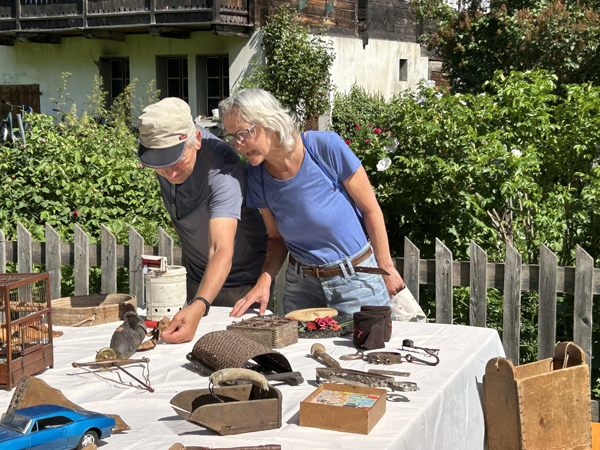
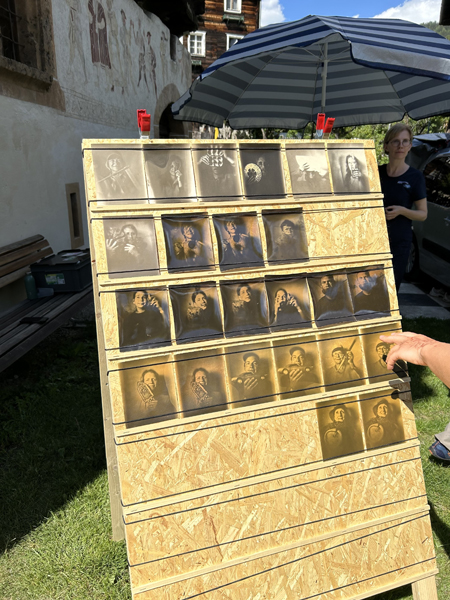
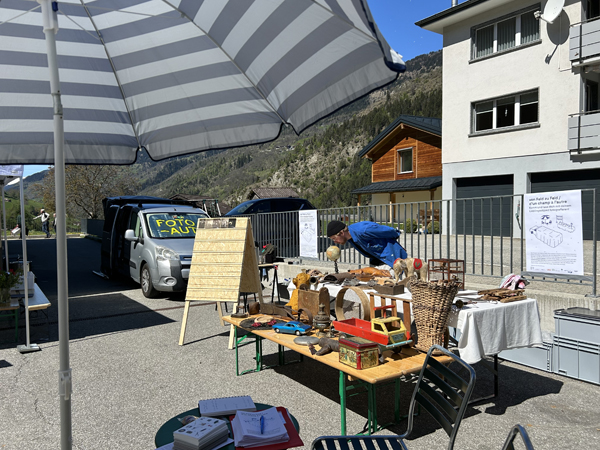
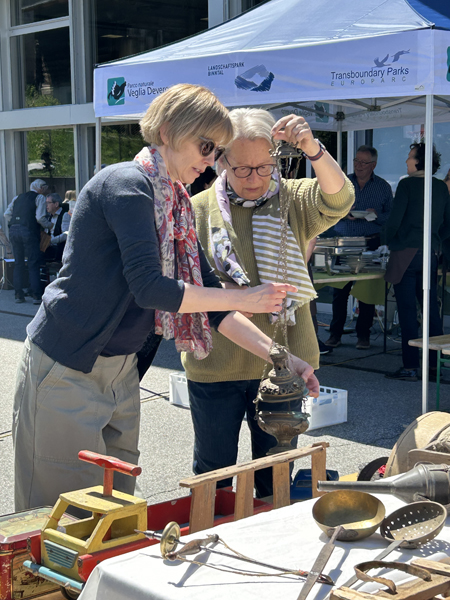
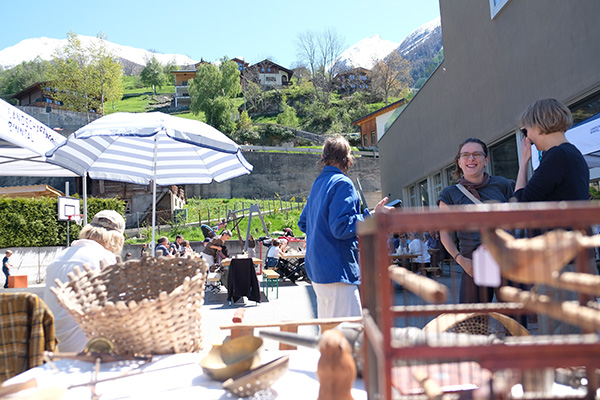
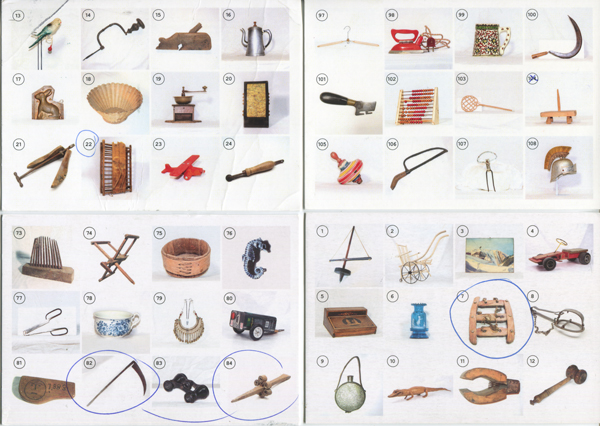
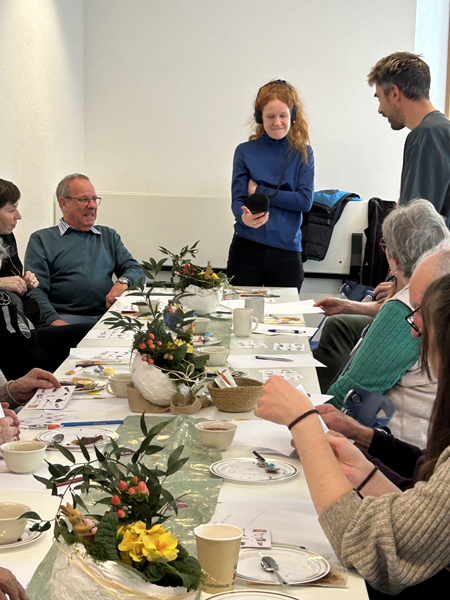
The first Champs d'action were then activated in Grengiols, Ernen, and Binn. During Champs d’objet, residents explored, selected, and cared for objects from the collection of the Regional Museum of the Binn Valley to question, but also recount, their stories, uses, and values. The museum’s new collection in 2026 will be enriched by these contributions.
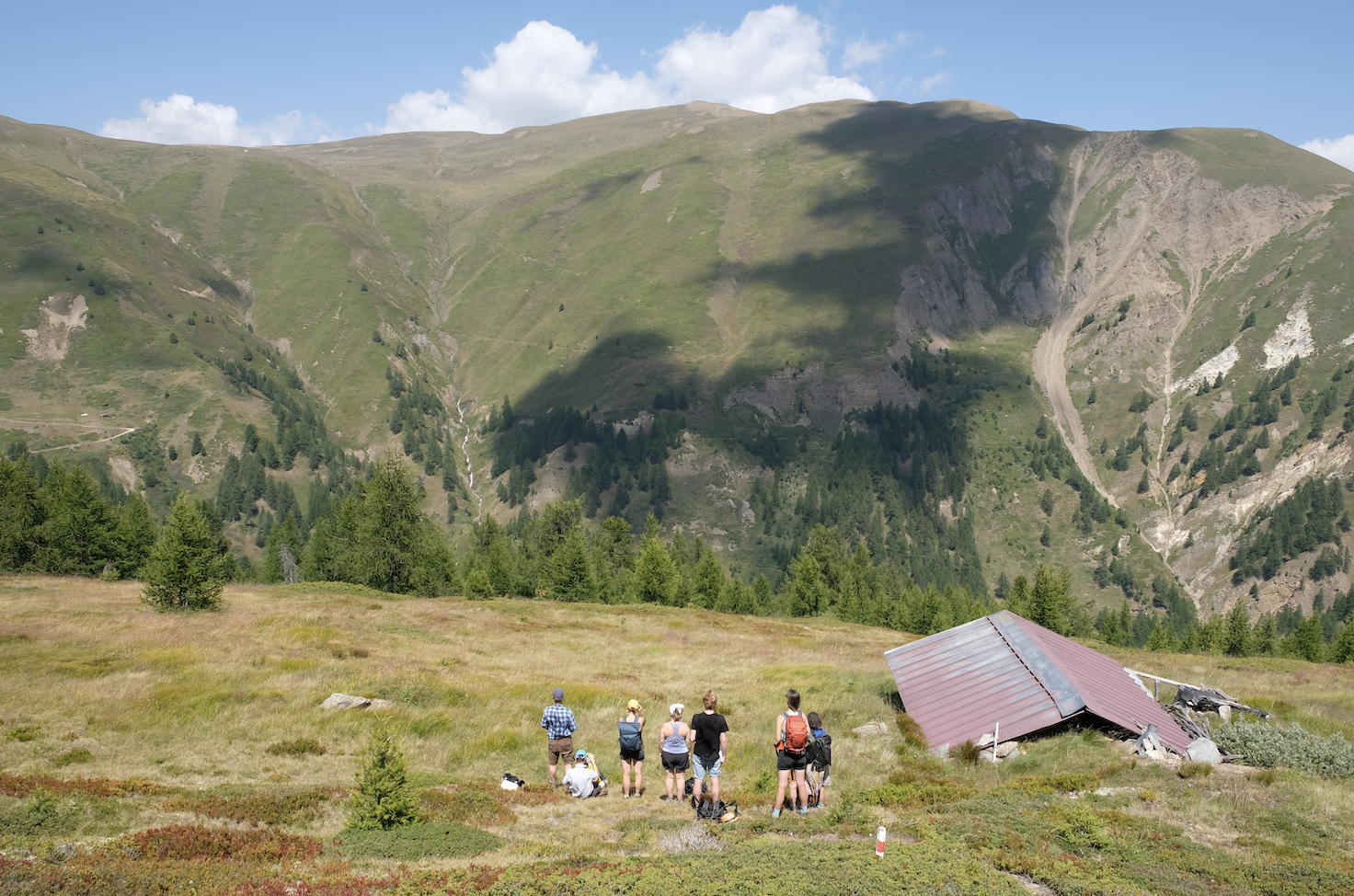
In the summer of 2025, Champ solaire took the form of a round table discussion and an immersive walk in the mountain pastures, inviting an embodied and poetic relationship with the landscape.
what we’re doing
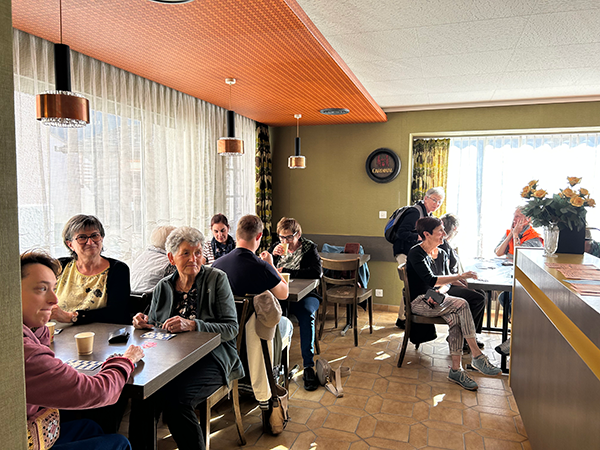
Since autumn 2025, we have formed a new transdisciplinary team in the Entremont valley, with whom we are continuing a co-creative process to identify the needs, desires, and aspirations of the communities across the region’s villages, giving rise to new situated actions.
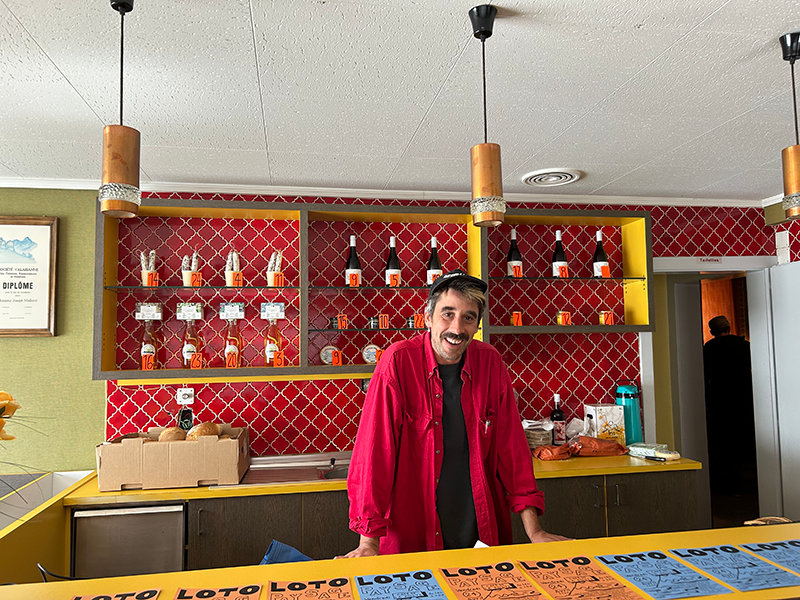
The first two nomadic residencies (spring and summer 2026) are titled Champ d’attraction. They revolve around the notion of the ruin, understood not only as a remnant, a collapse, or an abandonment, but also as a fertile ground for the imagination, an open space, a gap in the dominant narrative where everyone can project.
what’s next
The new collection of the Regional Museum of the Binntal Valley will be inaugurated in autumn 2026, building in part on the selection of objects previously carried out by the local population, along with an in-depth process of conception and production led by the transdisciplinary team.
The collective Facteur is preparing a printed publication that will serve simultaneously as a trace, a memory, and an extension of the human and landscape encounters experienced throughout the events, both in the Binn and Entremont valleys—a way of acknowledging and valuing the inspirations that emerged from them.
newsletter
All participatory actions and locations will be communicated on our website and via least’s newsletter.
transdisciplinary team
Rémy Bender – artist collectif Facteur
Basile Richon – artist collectif Facteur
Gabrielle Rossier – architect collectif Facteur
Christel Voeffray – artist collectif Facteur
Luzia Carlen - art historian, museologist, curator
Sabrina Gurten - ecologist, farmer and activist
Dominique Balmer – mountain guide
Stéphane Genoud – energy engineer (HES-SO)
Marcel Heinen – agricultor in the Valley of Saflisch
Annekäthi Heitz – botanist (UNIBAS)
Almut Schneider – anthropologist (HES-SO)
Fernand Lattion – Liddes resident
Fanny Glassey – community worker (ASDE)
Jean-Charles Fellay – secretary general of CREPA
least would like to thank all the people that contributed to the project by sharing their time, knowledge and resources:
IG Saflischtal, Grengiols; Landschaftspark Binntal; ASDE – Sociocultural Action of the Entremont District; CREPA – Regional Centre for the Study of Alpine Populations, Sembrancher; Bagnes Museum, Le Châble; Municipalities of Binn, Ernen, Liddes, and Bourg-St-Pierre; Maison du Saint-Bernard, Martigny; Annekäthi Heitz, botanist (University of Basel); Stéphane Genoud, energy engineer (HES-SO Valais-Wallis); Klaus Agten, resident of Grengiols and owner of a chalet in the Saflisch Valley; Marcel Heinen, farmer from Grengiols and agricultural operator in the Saflisch Valley; Almut Schneider, anthropologist specializing in human–environment relations, particularly in Alpine regions (HES-SO Valais-Wallis); Dominique Balmer, local guide; Aline, Jean-Claude and Madeleine Meilland, Café de la Poste, Liddes; Valérie Métroz and Laure Pagliotti, Dorsaz Grocery Store, Liddes; Patricia Lafarge, resident of Liddes; Fernand Lattion, resident of Fontaine-Dessus; René Bonvin, resident of Liddes; the Parish of Liddes; Bethléem Hall; Daisy Auderset, resident of Liddes; and all the people who contributed to and participated in the various stages of the project, both in the Binntal and in the Val d’Entremont.
media
Signs, traces, clues
Reading
Carlo Ginzburg and the evidential paradigm.
Devenirs buissons
Vivace
Se rencontrer sur le seuil
d'un champ à l'autre / von Feld zu Feld
Pizza with Ketchup
Reading
Deciding what to preserve, what to transform and what to relinquish is a complex process.
d'un champ à l'autre / von Feld zu Feld
The Time of Ruin
Reading
Over recent decades, ruins have come to occupy a central place in the Western imagination.
d'un champ à l'autre / von Feld zu Feld
The “life” of objects
Reading
Matter should not be considered as passive and inert, but as infused with intrinsic vitality.
d'un champ à l'autre / von Feld zu Feld
Peau Pierre
Fences and Power
Reading
The fruits of the earth belong to us all, and the earth itself to nobody.
Arpentage
Faire commun
d'un champ à l'autre / von Feld zu Feld
Se rencontrer sur le seuil
How happy is the little stone
Reading
Emily Dickinson celebrates the happiness of a simple, independent life.
Peau Pierre
Arpentage
Faire commun
d’un champ à l’autre / von Feld zu Feld
Heidi 2.0
Reading
The Alps and “proximity exoticism.”
Arpentage
d’un champ à l’autre / von Feld zu Feld
Learning from mould
Reading
Even the simplest organism can suggest new ways of thinking, acting and collaborating
Common Dreams
Peau Pierre
CROSS FRUIT
Faire commun
Arpentage
d’un champ à l’autre / von Feld zu Feld
Putting Off the Catastrophe
Reading
If the end is nigh, why aren’t we managing to take global warming seriously?
Common Dreams
Vivre le Rhône
Arpentage
d’un champ à l’autre / von Feld zu Feld
Signs, traces, clues
An art lover enters a museum. It is not his first visit, yet each time still feels exceptional. In Europe, public museums are still rare, and his profession as a physician leaves him little time to devote to his most cherished pastime. He sits on a bench before the painting he has chosen to study and remains there for a long while, silent, observing. Over the years, he has developed a personal discipline of attention, a technique of memory that allows him to preserve in his mind what he will soon have to leave behind. There is something cruel about the passion for art: once you step away from a work, you can rely only on your memories or on imperfect reproductions engraved and printed in black and white by some copyist.
After a while, he takes out his notebook and begins to draw; not the whole scene, but the details of the bodies depicted in the painting: the conch and lobe of the ears, the outline of the nails, the shape of the feet. At first, he had taken up this exercise out of professional habit, guided by the anatomical curiosity of a man accustomed to observing the diversity of human bodies. Over time, however, by copying and recopying these particular features, he has arrived at a singular conviction: to recognise the hand of a painter, one should not look so much at the overall style or the palette—which can be imitated—but at those details executed almost absentmindedly, with a quick gesture, less constrained by convention and closer to the artist’s individuality. It is a method of recognition akin to that used in clinical medicine, which must often rely on the fragmentation of symptoms in order to infer the underlying disease.
We are in the nineteenth century. The man seated before the painting is named Giovanni Morelli and he does not yet know that, a few decades later, the method he is slowly developing will influence not only the history of art but other fields of knowledge as well. Sigmund Freud himself would later recognise something strangely familiar in the approach of this great connoisseur and would write: “Psychoanalysis proceeds in the same way: it attaches particular importance to what appears insignificant, to the refuse and debris of observation, in order to discover secret or concealed things.” Indeed, in psychoanalytic practice, truth does not reveal itself in the most coherent and carefully organised speeches, but in the deviations: a slip of the tongue, an apparently secondary detail, a contradiction in the narrative. The analyst attends to what seems marginal, because it is precisely in these fissures that something may emerge that escapes conscious control.
A few centuries earlier, in Venice, a tale of Persian origin is printed: The Three Princes of Serendip. The story recounts the journey of three young princes who encounter a man distraught over the loss of his camel. Before he even has time to explain, the three princes begin asking him a series of astonishingly precise questions. Was the camel, they ask, perhaps blind in one eye? Was it, by chance, lame? Did it carry butter on one side and honey on the other? And had it not been ridden by a pregnant woman?
Troubled by such precision, the man concludes that the three must have stolen the animal and openly accuses them. Cornered, the princes explain that not only have they not stolen it, but they have never even seen it. Along the road, they say, they simply noticed certain details: the grass had been grazed only on the poorer side of the path, suggesting that the animal could see out of only one eye. One of the tracks, dragged through the sand, indicated an injured leg. Farther along, the insects gathering revealed that butter had leaked from one side of the load, attracting ants, while honey dripping from the other side had drawn flies. Finally, near the spot where someone had stopped to urinate, handprints could be seen in the soil: a sign that the person who stood up had needed to push themselves up with both hands—something that might happen to a pregnant woman.
Drawing: © Anaëlle Clot
Finally, one last and very long leap back in time. A person walks slowly across a muddy plain under a light rain. They are not looking into the distance, as someone trying to orient themselves in the landscape might do; their gaze remains fixed on the ground. At first glance, the terrain appears uniform. But it takes only a moment of bending down and paying close attention to realise that it is anything but: the brown surface is dotted with fresh, deep footprints leading toward a grove of birch trees. Here and there, blades of grass lie flattened, tufts of hair cling to the low branches of bushes. A little farther on, a few still-warm droppings slowly dissolve into the mud. An animal passed through here not long ago. It walked with a heavy step, perhaps tired from the hunt and the meal that followed. Perhaps it is now hiding in the grove, where among the trees there is a pond to drink from and thickets in which to take shelter. Night will soon fall. It would be wiser to keep one’s distance.
What unites these episodes scattered across time—episodes to which the historian Carlo Ginzburg alludes in his essay Clues: Roots of an Evidential Paradigm—is the same mental operation. In each case, someone finds themselves confronted with a reality that cannot be observed directly and must be reconstructed from clues: a minor detail in a painting, something that catches the eye along the edge of a road, a slip of the tongue in a conversation, footprints in the mud. The event itself is no longer present, yet it has left behind a series of scattered signs. The work of knowledge consists precisely in connecting them, patiently, until plausible patterns begin to emerge, much like a detective in a crime novel.
Drawing on examples such as these, Ginzburg proposed recognising the existence of a particular form of knowledge that cuts across very different disciplines, which he called the “evidential paradigm”. It is a way of knowing that proceeds less through general laws or abstract demonstrations than through the interpretation of clues—tiny, marginal signs that, if observed with sufficient attention, allow one to trace back to a broader reality. In this kind of knowledge, what appears individual or singular is not a residue to be eliminated in order to reach a more stable generalisation. On the contrary, it is the very point from which knowledge—situated knowledge—takes its momentum. This amounts to a genuine epistemological revolution: to consider the unrepeatable as the very condition that makes interpretation possible overturns a long tradition of scientific thought that sought, instead, to ground knowledge in the elimination of the particular.
In the 1970s, it was precisely around this intuition that what came to be called microhistory began to develop in Europe. Figures such as Ginzburg, Giovanni Levi and Carlo Poni proposed complementing the great structural syntheses of historical scholarship with close attention to marginal subjects: the community of a village, a judicial trial, the trajectory of a particular individual. The term micro does not so much refer to the size of the object of study as to a change in the scale of observation: looking closely makes it possible to perceive tensions, practices and forms of experience that remain invisible when the historical landscape is observed from too great a distance. As Giovanni Levi writes, it is a “search for truth related to the conflictual and active way in which people act in the world”, a search that proceeds through knowledge of the individual without renouncing precision or scientific ambition. This way of looking closely, of paying attention to details and situated experiences, resonates strongly with the way we work within least. When we carry out investigations in a territory in order to imagine co-creative artistic projects, we often adopt a similar approach: we focus on the micro scale—practices, narratives, uses—and place great value on lived experience, which complements and sometimes shifts theoretical frameworks.
The evidential paradigm also highlights a broader tension in the history of science. Since the early modern period, many disciplines have sought to ground their legitimacy in the use of quantitative instruments, in the ability to measure, to count and to establish statistical regularities. Yet there are domains of knowledge, such as the human sciences, where understanding cannot dispense with a confrontation with the singular case, with what cannot be reduced to a numerical series. The symptom of a patient, the handwriting of a manuscript, an archival testimony, these are not simply data among others. They are individual signs that demand interpretation, that escape any attempt at measurement and that carry a profound significance.
The evidential paradigm may appear to be a merely refined epistemological problem, but it is in fact a method that highlights the importance of experience and that, quite coherently, has its roots in a practice: hunting—the reading of traces left on the ground, the deduction of an invisible presence from signs scattered across the landscape. Some scholars have indeed suggested that a first form of narrative thinking may have emerged within hunting societies: the cognitive capacity, which we share with other animals, to connect dispersed signs into a coherent sequence of events. Footprints embody the paradox of a presence that is no longer there yet can be reconstructed from the traces it has left behind. Perhaps it is from this experience that a more general capacity arose: the ability to think in symbols and signs. Through many transformations, this capacity leads to art, to speech, to writing and to history itself: this very page where I, who wrote a few days ago, and you, who are reading at this moment, coexist—and from which someone, many years from now, may perhaps infer something about the beginning of the twenty-first century.
Pizza with Ketchup
I am in Geneva, in a house I share with other people. It is dinnertime. We eat in silence, or almost. At a certain point, one of them reaches for a bottle of ketchup and lets a thin stream fall onto a takeaway pizza. In that instant, something flickers across her face – a bodily hesitation that arrives before thought. She stops, looks at me and apologises. She murmurs something – ketchup, pizza, Italy. I am Italian, and that seems explanation enough: as though the country of my birth had appointed me its culinary sentry, as though tradition had trained me to spot the transgression. But that is not the case. I feel no offence. Ketchup on pizza does not trouble me. Sometimes, with a pleasure I hardly admit even to myself, I add mayonnaise. It is a gesture that scandalises; for that very reason, I don’t seek to defend it.
In recent years, in Italy and beyond, a form of attention has taken hold that increasingly resembles a discipline. A return to origins; a recovery of recipes and of “authentic” ingredients. On the most ambitious menus, pizza is no longer simply itself but a catalogue of its provenances: fiordilatte from Agerola, pomodorini del piennolo. Names that carry a promise of purity, as though the distance an ingredient has travelled could measure its truth. Choosing local produce is an ecologically responsible decision—but what do we really mean by “local”? In Milan, my city, indisputably Italian, is something that comes from Naples more local than something that arrives from Geneva? And what happens when the idea of proximity overlooks the conditions under which that food was harvested, the exploited lives that make its appearance on our tables possible? In southern Italy, the tomato bears stories of exploitation and organised crime, yet these realities seem to slide away, unable to fracture the symbolic value of tradition.
Tradition exerts a particular force: it turns habit into destiny, the past into a measure of the good. It persuades us that what is ancient must also be right, that what has endured need not be questioned. Yet if we look more closely at pizza, the myth begins to crack. American soldiers moving through Italy during the liberation from Fascism remarked on their surprise at not encountering pizzerias along the way. It is a telling detail: until the 1950s, pizza was an almost exclusively Neapolitan food, eaten standing up, in the street, with uncertain, often improvised, ingredients. It bore little resemblance to today’s obsession, with its disciplinary codes and chequered tablecloths that now seem to certify its origins. It was Italian emigrants in the United States who gave pizza a stable form. Far from home, suspended between nostalgia and economic opportunity, they transformed a mobile, impoverished food into an institution. This is something that sometimes happens in migrant communities: what was once ordinary becomes a symbol, even a form of resistance; what was fluid begins to stiffen. From there, pizza returned to Italy after the war, bearing a new identity, more defined, more exacting, more rigid.
The illusion of its antiquity is further reinforced by a carefully constructed story. We are told that the Margherita was invented in 1889, on the occasion of Queen Margherita of Savoy’s visit to Naples, and that its colours echoed the Italian tricolour. Today we know this story to be false, yet its effectiveness has not diminished in the slightest. It works because it answers a need. It does not matter that pizza is not truly ancient; what matters is that we needed to believe it was. Can we then say that, because it is recent and dynamic, pizza does not belong to Italian tradition? I don’t think so. But this compels us to acknowledge something essential: the strength of a tradition does not lie in its historical authenticity. Traditions do not establish themselves because they are “true”, but because they are useful. They draw on history, on stories, as a source of legitimation, a way of making what is contingent appear necessary.
I am an art historian, and history has always fascinated me, not as a repository of facts (which it is not), but as a field of narratives. I grew up in a country that has built a substantial part of its identity on preserving the past, especially its material past, often without questioning too closely what was being preserved, or why. Yet history is never neutral or objective: it is a layering of stories that guide our gestures and, over time, shape the reality we inhabit. The past does not exist in and of itself; it is continually reconstructed from the standpoint of the present. We make it. In 1889, no one needed a tricolour pizza. But that story suddenly became useful in a country that, after war, was searching for shared symbols.
The flag, after all, is a perfect example of a recently invented tradition, born alongside the emergence of nation states and their need to appear recognisable and cohesive. Its strength lies precisely in presenting as natural and immutable what is, in fact, the product of a specific historical conjuncture. Within the flag is condensed a constant tension between the idea of community and that of boundary, between the desire to belong and the gesture that determines who is excluded. It is from this awareness that, in the project Se rencontrer sur le seuil, with the artist Davide-Christelle Sanvee and the community of the Champs-Fréchets neighbourhood in Geneva, we are working on the creation of a neighbourhood flag. The aim is not to represent an identity as something fixed and self-contained, but to give form to a process, one that emerges from a shared way of inhabiting a place.
In my own experience, the colours of the national flag were once confined to particular occasions: sporting events, official ceremonies. Then they began to surface elsewhere, first on food packaging, then across a multitude of products, as a mark of excellence, a guarantee of quality. Food, and its presumed tradition, has become one of the preferred vehicles of an increasingly pervasive nationalist rhetoric.
The recent recognition of Italian cuisine as UNESCO Intangible Cultural Heritage seems to follow this trajectory. More than safeguarding living practices, it constructs a reassuring image, ready for consumption, from tourism to global markets, while whether those practices are genuinely alive in everyday life is far from certain. As Eric Hobsbawm observes in The Invention of Tradition, where old ways remain vital, there is no need to recover or reinvent them. And indeed, in Italy today, contrary to the stereotype, ready-made food is consumed as widely as elsewhere in Europe. The material conditions of life have shifted: working hours, family structures, access to food, the distribution of domestic labour. Long, calorie-dense preparations – a ragù simmered for hours – still exist, but as exceptions: comforting images of a timeless Italy that is, precisely for that reason, largely a construction.
It is telling that such images are invoked ever more insistently just as their material basis grows thinner: a symbolic language offering stability at a moment when social, economic and cultural transformations are rapid and often disorientating. As Hobsbawm again notes, it is precisely in such moments that the invention of traditions intensifies: when past models are no longer practicable, yet remain available as an identity reserve. Tradition is mobilised to uphold a worldview grounded in fixity, nostalgia and social roles that no longer correspond to the realities of societies in transition. By evoking a compact and coherent past, complexity can be simplified, and change recast as deviation rather than as a structural and generative condition.
As a researcher, I work, among other things, on ecological practices rooted in local communities and deeply embedded in particular territories. I often encounter techniques and forms of knowledge described, somewhat automatically, as “traditional”. Yet in most cases, the people who sustain these practices do not regard tradition as fixed or untouchable. On the contrary, what emerges from fieldwork is a far more supple understanding: tradition as a body of customs that combines symbolic value with technical and pragmatic care – practices devised to meet concrete needs, and therefore ready to be modified, adapted or abandoned when conditions change. Life, quite simply, demands it.
While preparing the project d’un champ à l’autre / von Feld zu Feld, we came across a series of old agricultural tools, among them a wooden “comb” used to harvest blueberries. We were drawn to it, almost moved, precisely because it was “traditional”. Yet an analysis carried out with a local biologist revealed that the tool damages the plant, compromising its capacity to regenerate. Knowledge evolves. Responsibilities evolve with it. To pretend otherwise is to turn tradition into an alibi.
This does not mean that traditions lack value. On the contrary, one of their most profound effects lies in their ability to hold communities together. It is not necessarily the efficiency of a practice that forges durable bonds, but the repetition of gestures, the sharing of symbols, an irrational dimension that generates belonging. This is something we sought to activate, for instance, in our project Vivre le Rhône, which aimed to foster a community of river guardians. It is undeniable, however, that mechanisms of this kind can harden, shifting from spaces of relation into instruments of exclusion. Tradition can become a Trojan horse for ideology.
Deciding what to preserve, what to transform and what to relinquish is a complex process. It cannot be resolved by appealing to a mythologised past, nor, conversely, by invoking efficiency alone. It requires a situated gaze, one capable of distinguishing what is alive and why, from what is merely staged, as so often happens within the tourist circuit. The Alps, for instance, have gradually been reshaped into a narrative landscape – reassuring, aestheticised – in which objects and practices are lifted out of everyday life and recomposed as scenery for the outsider’s gaze. This is what has been described as “proximity exoticism”, a notion I explored in one of our newsletters: an idea of tradition that serves not those who inhabit a place, but those who consume it. Tradition is transformed from process into image, stripped of contradiction and change in order to remain recognisable.
Drawing: Anaëlle Clot
As an art historian, I am interested in the moment when preservation ceases to appear as a technical gesture and reveals itself for what it is: a choice about the past, the present and the future. To decide what to conserve and what not to conserve is to establish a hierarchy among things—among traces and fragments deemed worthy of crossing time. Almost invariably, this hierarchy is mirrored in lives as well: in which experiences are made visible, which memories are safeguarded, which losses are rendered acceptable. Preservation is never merely conservation; it is a way of organising continuity, of distributing attention, care and resources. For that reason, discourse on tradition is never innocent. It speaks, above all, about the kind of future we permit ourselves to imagine.
In an era marked by climate crisis, this question becomes more urgent still, because preservation no longer concerns only objects and monuments, but the very conditions that make life possible. And yet it is precisely here that a fracture appears: between the obsessive, almost liturgical care we devote to what we call heritage and our readiness to tolerate the slow erosion of ecosystems, the normalisation of the irreversible. It is as though we had developed a sentimental education in loss that functions perfectly when loss has a name, a frame, a certified value, but falters when what disappears is diffuse, not easily representable, or too vast to be contained within an image.
A few years ago, I was struck by the public reaction to the actions of Last Generation and similar groups – acts of civil disobedience by environmental activists intended to produce a symbolic shock through interventions on works of art. The immediate wave of indignation, the shared sense of profanation that arises the moment an artwork is touched, was revealing. I was invited to speak about these questions at the conference Museums at the Ecological Turn, and it became clear to me how deeply the issue concerned the hierarchy of griefs and fears that a society renders available, and which Ultima Generazione, with their question “What matters more, art or life?”, lay bare. They short-circuit our capacity to be scandalised and our capacity to act.
Until not long ago, ecosystems were imagined as a stable, almost eternal backdrop, capable of absorbing the consequences of human transformation. It was within this understanding of the future that the industrial choices of the twentieth century were made. The establishment of the Ilva steel plant in Taranto, in southern Italy, is emblematic. Centuries-old olive groves were uprooted to make way for a modernity promised as redemption – of labour, of wages, of escape from poverty – at a historical moment when environmental damage had not yet been perceived as an irreversible threshold. The future seemed expansive enough to compensate for everything.
Taranto, to which we are dedicating a research-creation project at least, has been classified by the United Nations as a “sacrifice zone”: a severely contaminated territory in which vulnerable communities disproportionately bear the environmental and social costs of a development model whose benefits are enjoyed elsewhere. This harsh geography of inequality is inscribed in the city’s very layout. Its historic centre has been progressively allowed to decay, as life shifted towards new neighbourhoods built in proximity to the Ilva plant. Today, the territories we inhabit are increasingly scattered with more recent ruins: disused industrial infrastructures, abandoned office blocks, suspended spaces – fragments of a time that failed to become history. In a text published in least’s latest newsletter, I sought to reflect on these remains of a world unfinished rather than concluded: ruins too close to us to be read at a distance, keeping open a question about time, about how much future we once imagined, and how little of it now remains to be redistributed.
In the next session of our training programme Cultural Practices in Transition, the anthropologist Giulia Angrisani will lead a speculative storytelling workshop at Geneva’s Musée d’Art et d’Histoire. For two days, in keeping with the museum’s new guidelines, we will suspend its function as a place of conservation and treat it instead as a space for generating new thought worlds. As we prepare the workshop together, I will introduce one exercise in advance: standing before a painting and imagining what happened before, and what might happen after. It is a minimal gesture, yet it produces a shift. It disrupts fixity, restores time to the object, and reinserts it into a continuity that belongs not only to the past but also to the realm of the possible. I believe this exercise can be extended to anything – a building, a landscape, a territory, a practice – because it compels us to take a position: would I have wished to preserve it, to transform it, to let it go? And above all: who decides, and in the name of which future?
I have been writing this newsletter for four years, and this is the first time I have chosen to speak in the first person. The reflections gathered here arise from a genuine difficulty I encounter in my work as a researcher at least. I accompany artistic projects involving local communities and transdisciplinary teams, and in these contexts, I am never an external observer. I take part in the processes as an individual, with a history, emotions and doubts. The way we relate to the past, and the ways in which the past is mobilised, is one of the questions that returns to me most insistently. Too often the past is understood either as an objective, unquestionable narrative or, conversely, as something freely malleable. Yet producing art or culture entails responsibility. The images, narratives and references we choose do not remain neutral: they produce effects, orient our gaze, and render certain futures more imaginable than others. We see this clearly in the resurgence of nationalisms and violences that permeate the world we inhabit.
With this text, I did not wish to offer answers I do not possess – nor particularly want to possess – but rather to convey the complexity of standing before questions that resist closure, contradictions that ought not to be resolved. To share them, to acknowledge them as such, to work through them, as we do at least, is already a way of making and circulating more conscious choices, artistically, socially and politically.
One of the most precious aspects of research within collective artistic processes lies precisely here: in the absence of any obligation to arrive at conclusions, and instead in the capacity to remain with questions, with ambivalences, and to discover within them a meaning that is never purely individual. Conducting research at least means inhabiting this space: being situated; holding together everyday experience, study and practice; relating the local and the global without separating what happens nearby from what unfolds elsewhere; remaining stubbornly within the process, even when it generates frustration.
Like this one: I tried several times to close this text by returning to the question of pizza. But sometimes the past, if it is not to collapse into crude rhetoric, must simply be allowed to fall away.
–Stella Succi, researcher at least
The Time of Ruin
Over recent decades, ruins have come to occupy a central place in the Western imagination. From post-apocalyptic cinema and video games to disaster tourism, destroyed cities, abandoned houses, and disused infrastructures increasingly serve as backdrops for contemporary narratives. This omnipresence does not merely point to an aesthetic fascination with decay; rather, it signals a deeper shift in how we relate to time, history, and the built environment.
In this context, the phenomenon of urbex (urban exploration) is particularly revealing. Urbex is not about contemplating ruins from a distance, but about entering and moving through them: former factories, hospitals, schools, theatres, hotels. These are, more often than not, ordinary, everyday buildings—places we can still easily imagine inhabiting. It is precisely this familiarity that generates a distinctive unease. What unsettles us is not the remoteness of a long-lost past, but a more disquieting form of separation, as though these sites existed in a parallel time: too close to us to feel fully historical. Contemporary ruins do not appear as the remains of a world that has definitively ended, but as suspended fragments of a world that seems unable to transform itself.
Diane Scott, in her essay Ruine, demonstrates with particular acuity that the proliferation of ruins must be understood within a cultural regime in which the object and its representation no longer merely coexist, but become inseparable. Today, it is impossible to “see” Detroit—an emblematic city of deindustrialisation and contemporary ruin—without also seeing it through the lens already imposed by cinema and photography. These media have shaped it in advance, producing a hyper-photogenic, polished, and aesthetically seductive image of ruin, conspicuously emptied of its inhabitants. Yet this emptiness is far from neutral. It operates as a veil: behind the postcard ruin lie state abandonment, poverty, violence, segregation, political trauma, and the people who continue to live in the city under conditions of extreme precarity. Ruin here is not simply a theme; it functions as a dispositif, capable of converting a historical problem into a surface for contemplation, draining it of its conflictual force.
From this perspective, the vogue for vintage aesthetics and the logic of cinematic reboots—both hallmarks of recent decades—follow strikingly similar dynamics. Objects, styles, and ideas from the past are retrieved only on the condition that they be detached from their histories. The fragment survives only insofar as it is softened, defanged, and transformed into mood or atmosphere. The resulting nostalgia is often shot through with cynicism: a fondness for the past that keeps it safely at arm’s length, treating it as little more than an aesthetic catalogue stripped of antagonism. The reboot operates in much the same way. Rather than reactivating history, it freezes it, re-presenting it as an endless present devoid of risk or rupture. Once again, time does not advance—it accumulates.
Drawing: Anaëlle Clot
This state of temporal suspension had already been anticipated by Robert Smithson at the end of the 1960s, when he coined the notion of “ruins in reverse” in his celebrated essay A Tour of the Monuments of Passaic, New Jersey. Modern constructions, he argued, do not fall into ruin after having fulfilled their purpose; they emerge as ruins even before completing their life cycle. Unlike the Romantic ruin, which gestures towards a distant past and confers a sense of historical depth, modern ruins appear within the lifetime of those who witnessed their construction. The material residues produced by accelerated cycles of building no longer promise endurance but instead signal planned obsolescence—the pre-consumption of the future.
This acceleration has turned contemporary ruins into generational experiences. Buildings vanish, are decommissioned, or rendered unusable within the span of a few decades. The catastrophe that gives rise to them—economic collapse, industrial shutdown, environmental disaster—is often precisely datable. The time of the ruin itself, however, is not. It drifts in an undated “after”: an interregnum that seems to belong less to an aftermath than to an after-history. This is a time that no longer enables us to measure the past, nor to project ourselves clearly into a future.
This is why, in contemporary reflections on ruins, the gaze increasingly turns forward rather than back. Ruins become screens onto which a future of ecological devastation is projected—still amorphous, yet already intuitively graspable within the Capitalocene—where industrial remnants make visible a toxic and enduring human imprint. No longer sites of melancholic reflection on the passage of time, nor monumental relics of lost values and vanished splendours, ruins now present themselves as hostile environments that return to the societies that produced them the violence of short-term economic thinking.
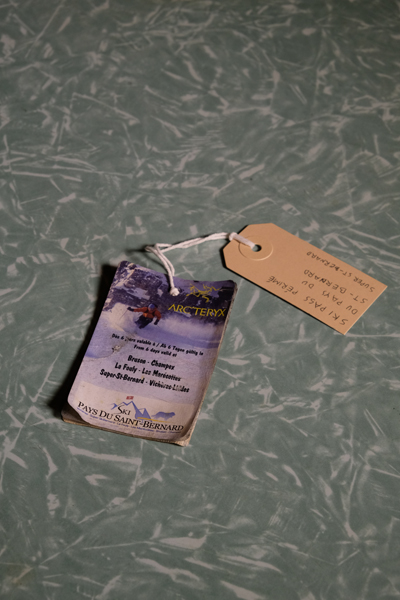
This framework now extends to territories that have been less intensively anthropized, such as the Alps. The mountains are increasingly dotted with very recent ruins: abandoned ski lifts, rusting pylons, deserted hotels. These structures speak with particular clarity of futures imagined and consumed too quickly. Their abandonment results from an entanglement of economic and ecological forces: the disappearance of reliable snowfall, rising temperatures, and the broader climate crisis have rendered untenable a tourism model built around snow. Infrastructures that are still technically operational are thus abruptly reduced to uselessness—ruins generated by a mismatch between human projects and ecological conditions. Alpine ruins therefore stand as some of the most visible expressions of a present that confronts its own remains yet struggles to turn them into history.
Yet even within landscapes marked by loss and failure, ruins are not solely sites of endings. Increasingly, they become new habitats for what exceeds and outlives the human, turning into refuges for animals and improvised ecological corridors, and opening up unexpected, hybrid spaces of life. Ruins emerge as sites of asymmetric coexistence: humans withdraw, leaving traces behind, while the more-than-human—plant, animal, microbial—reoccupies, transforms, and repurposes what remains. In this sense, ruins offer a way of rethinking relations between human projects and the living world; and if the present struggles to make history of its own debris, ruins remind us that no space is ever truly empty.
The “life” of objects
The relationship between human beings and objects, between subject and matter, is traditionally considered in terms of use, or even domination. Western philosophy, with a few exceptions, has generally made a strict distinction between the human world and the world of things, attributing to the former an absolute primacy in terms of agency and intentionality. Nevertheless, in our daily experience, this separation between us and the world of objects is much more nuanced, dynamic and interactive.
From a pragmatic point of view, one need only think of the myriad of technologies that surround us, from forks to computer networks that influence our lives. On a symbolic level, objects also play a fundamental role in the construction of individual and collective identities, actively participating in the formation of cultural, emotional and social representations. From this perspective, the strict distinction between subject and object fades away, giving way to a more complex network of mutual interactions.
In this context, American theorist Jane Bennett came up with the concept of “vibrant matter”. Matter should not be considered as passive and inert, but as infused with intrinsic vitality. Objects and matter are not reduced to simple instruments subject to human will, but exercise an agency of their own, influencing humans and actively participating in the construction of the social and political world.
According to Bennett, reality must be understood as a series of “assemblages”, where living and inert matter, animals and objects, particles, ecosystems and infrastructures all contribute equally to the production of effects. In her book Vibrant Matter, she cites and analyses the major power outage that struck the North American grid in 2003, plunging millions of people into darkness – an event that shows the extent to which an entity that is supposedly devoid of agency can exert a decisive influence on humans. As she writes: “To the vital materialist, the electrical grid is better understood as a volatile mix of coal, sweat, electromagnetic fields, computer programmes, electron streams, profit motives, beat, lifestyles, nuclear fuel, plastic, fantasies of mastery, static, legislation, water, economic theory, wire, and wood – to name just some of the actants.” By analysing the chain of events that led to this blackout, Bennett highlights its emergent character, which calls into question traditional concepts of responsibility and causality, as well as the distinction between subject and object. While such an approach is obviously manifested in a large-scale event, it can be extended to our entire experience of the world.
Moreover, on a scientific level, the traditional distinctions between living and non-living matter, organic and inorganic, are tending to blur. Materials considered to be inert are proving capable of growth, self-organisation, learning and adaptation to the environment. The idea that intelligence is an exclusively human trait is now obsolete and misleading: this is the premise on which Parallel Minds by chemist and theorist Laura Tripaldi is based. In this book, she focuses in particular on the concept of interface, which we often associate with digital technologies, but which, in chemistry, refers to a three-dimensional space with mass and thickness, where two distinct substances come into contact. In this space of interaction, materials adopt unique behaviours: Tripaldi takes the example of water, which, on contact with a smooth surface, takes the form of a drop.
Drawing: ©Anaëlle Clot.
More than a technical notion, the interface invites us to rethink our relationship with matter: “In this sense, the interface is the product of a two-way relationship in which two bodies in reciprocal interaction merge to form a hybrid material that is different from its component parts. Even more significant is the fact that the interface is not an exception: it is not a behaviour of matter observed only under specific, rare conditions. On the contrary, in our experience of the materials around us, we only ever deal with the interface they construct with us. We only ever touch the surface of things, but it is a three-dimensional and dynamic surface, capable of penetrating both the object before us and the inside of our own bodies.”
The act of “touching” is also central to the thinking of philosopher and physicist Karen Barad. In her book On Touching – The Inhuman that Therefore I Am, Barad explains that, from the point of view of classical physics, touch is often described almost as an illusion: indeed, the electrons that make up the atoms of our hands and the objects we touch never actually meet but repel each other due to electromagnetic force. This means that any contact experience always occurs at a minimum distance, thus defying our sensory intuition.
Barad goes even further by analysing the question through quantum field theory, which introduces the possibility that matter is not something static and defined, but rather a continuous tangle of relationships and possibilities. The separation, which seems obvious to us, between one body and another fades away, because the boundaries between the “self” and the “other” are continually redefined, in a process that Barad calls intra/action and which would constitute the very essence of our reality – a reality where everything is constantly co-produced and co-determined. This principle implies that identity is not something pre-established but the result of infinite variations and transformations, according to a queer and non-binary model.
These approaches invite us to rethink our relationship with everyday objects and with matter in general. If matter has an agency of its own, we must recognise our belonging to a complex and interconnected system, with philosophical, political and ecological implications. Accepting that matter shapes us as much as we shape it, implies increased responsibility for our technological and environmental impact and, ultimately, for ourselves, as we inhabit assemblages, interfaces and intra/actions.
Fences and Power
“We pray your grace that no lord of no manor shall common upon the common.
We pray that all freeholders and copyholders may take the profits of all commons, and there to common, and the lords not to common nor take profits of the same.
We pray that Rivers may be free and common to all men for fishing and passage.
We pray that it be not lawful to the lords of any manor to purchase lands freely, (i.e. that are freehold), and to let them out again by copy or court roll to their great advancement, and to the undoing of your poor subjects.”
The date is 6 July 1549. The peasants of Wymondham, a small town in Norfolk, England, have risen in rebellion. They are marching across the fields to cut down the hedges and fences of private farms and pastures, including the estate of Robert Kett, who surprisingly joins the protests, giving his name to the rebellion. As they march, they are joined by farm workers and craftspeople from many other towns and villages. On 12 July, 16,000 insurgents camp at Mousehold Heath, near Norwich, and draw up a list of demands addressed to the King, including those mentioned above. They will hold out until the end of August, when more than 3,500 insurgents will be massacred and their leaders tortured and beheaded. But what provoked this insurrection? And why was the repression so bloody?
Kett’s Rebellion was a reaction to the hardships inflicted by the extensive enclosures of common lands. These lands, which were of great economic and social importance, were managed according to rules and boundaries established by the communities themselves, guaranteeing a balance between their members. The plots were used for grazing, gathering wood and wild plants, haymaking, fishing, or simple passage, and even included shared farmland, where peasants each cultivated small portions of the collective land. The common land system thus contributed to the subsistence of the communities and, in particular, the most disadvantaged.
With enclosures, common land was reorganised to create large, unified fields, demarcated by hedges, walls, or enclosures, and reserved for the exclusive use of large landowners or their tenants. This gradual process of land appropriation was not exclusive to England but was a large-scale phenomenon that spread in various forms throughout Europe (and even more violently in its colonies) from the 15th century onwards. This is the phenomenon that Karl Marx describes in Das Capital as “primitive accumulation”: agricultural workers, deprived of their means of production (land), are forced to work for wages, possessing nothing other than their labour power. This was one of the factors that led to the emergence of capitalism, a process involving violence, expropriation, and the breaking of traditional social ties.
Drawing: ©Anaëlle Clot.
Another significant aspect of enclosures is their impact on the role of women. Until the Middle Ages, a subsistence economy prevailed in Europe, in which productive work (such as tilling the fields) and reproductive work (such as caring for the family) had equal value. With the transition to a market economy, only work that produced goods was considered worthy of remuneration, while the reproduction of labour power was deemed to have no economic value. What’s more, as we have shown, the loss of use rights over common land particularly affected already-discriminated groups such as women, who found in this land not only a means of subsistence, but also a space for relationships, knowledge sharing, and collective practices.
Feminist researcher Silvia Federici, in her celebrated book Caliban and the Witch: Women, the Body and Primitive Accumulation, reflects on the link between the privatisation of land and the worsening of women’s condition: “For in pre-capitalist Europe, women’s subordination to men had been tempered by the fact that they had access to the commons and other communal assets (…). But in the new organisation of work every woman (…) became a communal good, for once women’s activities were defined as non-work, women’s labour began to appear as a natural resource, available to all, no less than the air we breathe or the water we drink (…). According to this new social-sexual contract, proletarian women became for male workers the substitute for the land lost to the enclosures, their most basic means of reproduction, and a communal good anyone could appropriate and use at will.”
The consequences of this exacerbation of power relations between the sexes were manifold: women found themselves increasingly confined to the domestic sphere, economically and socially dependent on male authority, and controlled in the management of their bodies by demographic policies that were essential to a society dependent on the flow of labour power. Control of the female body, through the condemnation of contraception and the traditional knowledge associated with care, became central to the emerging capitalist society. The witch-hunts that struck down thousands of women in Europe and America were part of this repression and control.
In the European colonies, similar processes of expropriation and violence were justified by the rhetoric of domination over “savages”. This pattern, based on the extraction of resources and cheap labour, continues to this day: think of the appropriation of indigenous lands in the global South for the exploitation of natural resources. Capitalism and oppression are two sides of the same coin.
Jean-Jacques Rousseau, in his Discourse on the Origin and Basis of Inequality, wrote: “The first person who, having enclosed a piece of ground, bethought himself of saying This is mine, and found people simple enough to believe him, was the real founder of society. From how many crimes, wars and murders, from how many horrors and misfortunes might not any one have saved mankind, by pulling up the stakes, or filling up the ditch, and crying to his fellows, ‘Beware of listening to this impostor; you are undone if you once forget that the fruits of the earth belong to us all, and the earth itself to nobody.’”
Rousseau’s thinking in this book is not without its problems, and, among other things, fuelled the dangerous myth of the “good savage”, which would in part justify colonialism. Yet these words represent a warning and a hope, inviting us to question the very foundations of society: structures, institutions, and economic systems are not immutable. Change is always possible, provided we have the courage to imagine it.
How happy is the little stone
In this brief poetic composition, Emily Dickinson celebrates the happiness of a simple, independent life, represented by a small stone wandering freely. Far from human worries and ambitions, the stone finds contentment in its elemental existence. Written in the 19th century, the poem reflects the growing disillusionment with industrialisation and urbanisation, which led many to aspire to a more modest and meaningful life.
How happy is the little stone
That rambles in the road alone,
And doesn’t care about careers,
And exigencies never fears;
Whose coat of elemental brown
A passing universe put on;
And independent as the sun,
Associates or glows alone,
Fulfilling absolute decree
In casual simplicity
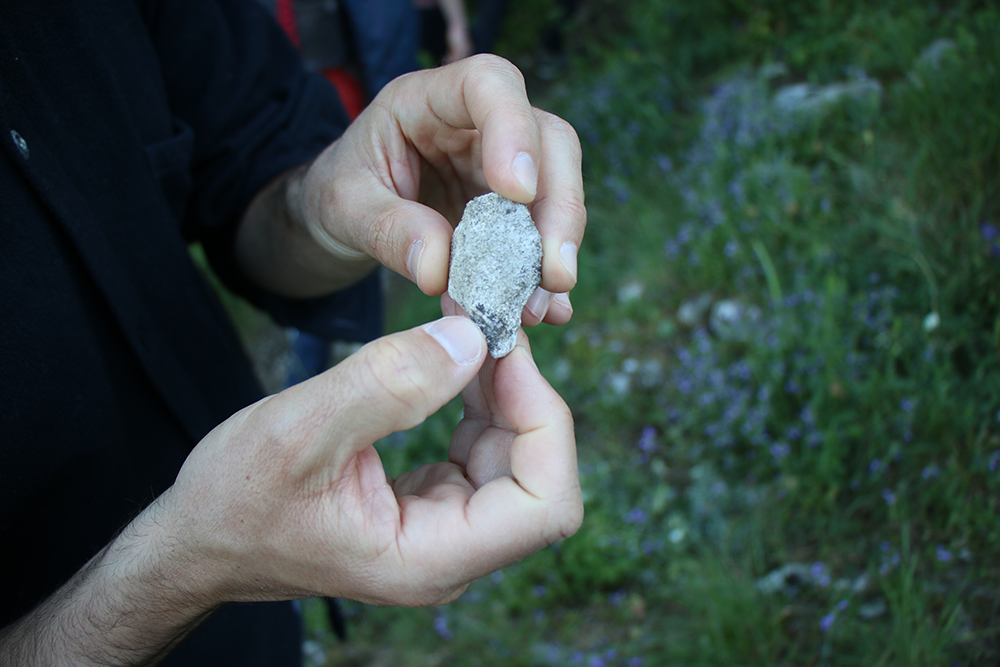
Image: Altalena.
Heidi 2.0
In 1668, Johannes Hofer described a curious physical and mental disorder that afflicted Swiss mercenaries in the service of French king Louis XIV in his medical thesis at the University of Basel. To this ailment, which has as its symptoms a state of afflicted imagination, crying fits, anxiety, palpitations, anorexia, insomnia and an obsessive longing for home, Hofer gave the name “nostalgia”: a term he coined by combining the Greek words nostos (homecoming) and algìa (pain). In later studies, the origins of nostalgia was ascribed to alleged brain damage caused by the sound of cowbells on the necks of grazing cows or to the effect of listening to mountain songs that threw young Swiss men who were far from their native soil into a prostrating state of delirium melancholicum.
The fact that the invention of the word “nostalgia” occurs precisely in the Swiss context is no coincidence: indeed, the Alpine valleys have been suffering a phenomenon of emigration and depopulation since ancient times and on several occasions, with different causes and intensity depending on the historical period. It is only in the post-World War II period, however, that the migratory phenomenon became first customary and then a real haemorrhage. The cities offered more stable employment, independent of weather conditions and seasonality, and a range of services and opportunities unparalleled by life in the valleys and the meagre income from mountain products. Local administrations saw no alternative: the choice was between investing in profitable hospitality activities linked to ski tourism, or depopulation. And with ski tourism came the rapid process of urbanisation that reshaped the mountains.
In the 1960s, therefore, an uncontrolled rush of construction of ski resorts, hotels and second homes began, responding to the conquest of the new dimension of consumption and leisure by the urban middle classes. It is precisely the relationship between the increasingly unliveable city life and the idealised representation of the Alps that drove this movement: Switzerlandalready presented itself to the first British and American tourists in the 19th centuryfrom this perspective, as evidenced by the arcadian atmosphere of Heidi, Johanna Louise Spyri’s novel which was published in 1880 and left a lasting mark on Alpine imagery. While Spyri’s novel took a complex look at the changes in Alpine ways of life as a result of industrialisation, the dominant narrative around the figure of Heidi focused on an unresolved tension between the city and the mountains, portraying Heidi’s life as healthy and “natural” when compared to the one of her sickly cousin Klara, trapped in the artificiality of urban habits. This misinterpretation reflects a distinction between nature and culture that has profoundly damaged the ability to realistically address development models in the Alps.
Alongside the concrete pouring of accommodation facilities, new asphalt roads proliferated, which, as a first consequence, reduced the capillary mobility that for centuries had united the smaller places in the valleys. As Marco Albino Ferrari recounts in his Assalto alle Alpi (Assault on the Alps), “the car, paradoxically, has made the mountains less habitable and more remote. The widespread life on the slopes has been squeezed down along the axes of the main road system, in a linear urbanism where everything must be within reach of the motor. […] The centre becomes the valley floor, next to the regimented river to prevent flooding and reduce the unusable areas of the floodplains. And it is in this mental geography, reversed with respect to previous centuries, that the valley slopes have become increasingly wild, unknown and distant. The mountain internally separates and loses those slope sides. Those mid-altitude spaces that in the indigenous experience constituted the heart of the mountain system become synonymous with high-altitude lands, where the snow allows the playful consumption of the territory vertically.”
Taking a leap forward some fifty years, we realise that the hoped-for redistribution of opportunities and prosperity over the local communities was actually a mirage destined to be reversed within a few years. The ski capitals that polarise the gaze of the general public are but a minority portion of the 6,100 municipalities in the Alps: a handful of names among an often-unknown multitude of towns and villages marked by isolation and oblivion. The depopulation that was to be avoided has taken on the dimensions of a veritable exodus. In some inland valleys, the birth of a child or the relocation of a young couple becomes a news story.
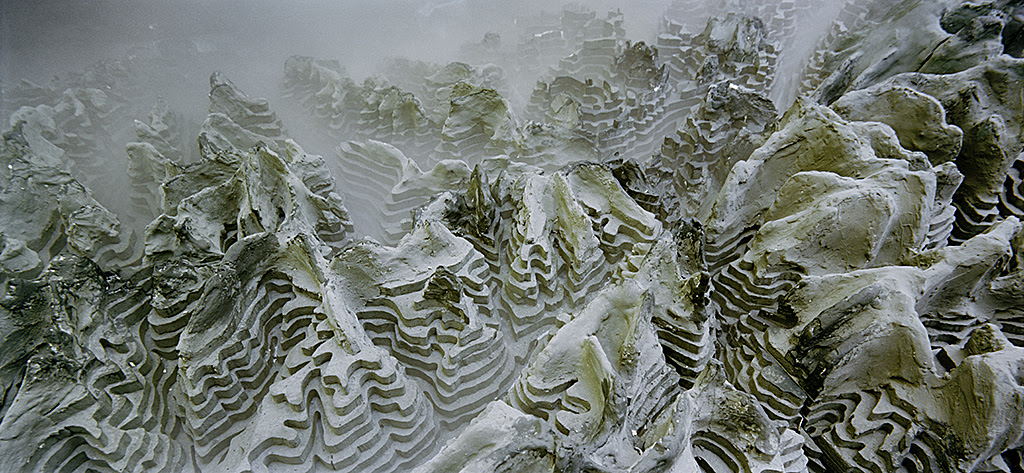
EPFL, École polytechnique fédérale de Lausanne, Alps model, Lausanne, Switzerland. Still from the film Alps. © Armin Linke, 2001.
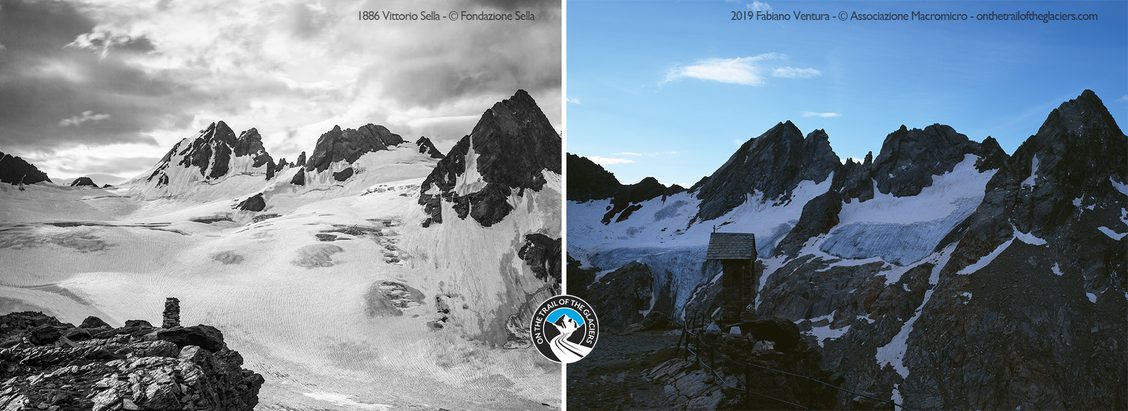
On the other hand, even the most famous ski resorts are no longer safe. The glacial mass of the Alps has shrunk by 50% since the beginning of the 20th century, snowfall is increasingly sparse, and temperatures are rising. The shifting of the snow line has left the smaller, low-altitude ski resorts in a state of neglect and depression, to which they are still reacting with palliative works such as moving ski lifts a few hundred metres higher up, or the proliferation of artificial snow cannons. If operations of this kind are only palliative measures intended to plug a gap for a few more seasons, we even reach grotesque gestures such as digging a ski trail in a glacier, as recently happened at the Theodul glacier in Zermatt for the Ski World Cup. The crisis in the ski industry is being responded to with outright therapeutic overkill rather than by offering alternatives.
For the past two decades, the economy based on winter sports and or blanc (white gold, i.e. snow) has been going through a crisis, along with urban-based consumption models that underpinned it. A new approach to the mountains is emerging, that of “Alpine minimalism”, which prefers the frugality of the mountain hut and so-called slow tourism in an often anti-modernist key to the high-altitude resort. While this new transformation has the merit of avoiding the dysfunctions associated with the sharp division between high and low season, once again it is a distortion. The appearance of old farm implements on the facades of chalets (not always locally sourced), copper cauldrons hanging in restaurants, traditional clothes to dress waiters, what the anthropologist Annibale Salsa has called “proximity exoticism”, is born, or rather a posturing and anti-technological form of authenticity—Heidi 2.0.
This approach is paradoxical even at a brief glance. In Fragments d’une montagne, Nicolas Nova describes the landscape of Conches, in the upper Valais: “In this corner of the Alps, where the Rhône is still no more than a small river close to its source, the valley is criss-crossed by a host of networks: overhead electricity cables, roads, tunnels and a summit track that is only accessible in summer, the Matterhorn-Gotthard Bahn railway (which carries both passengers and vehicles to avoid the Furka Pass), cross-country ski trails or snowshoe trails studded with orange Swissgas signs indicating the presence of the underground gas pipeline. It’s as if we’re looking at a machine-mountain, with a technical framework that transforms the environment into a productive infrastructure. A Victor Frankenstein-style hybrid of geology and electricity pylons, cavities, rails, dams, bunkers of varying degrees of strength, cable cars, pipes, roads, mobile phone masts and rivers with rectified courses. The mountain-machine, a recurring motif in the Alps, with watercourses, valley bottoms and reliefs covered with all this equipment”.
The anthropization of the Alps is not a new phenomenon: for thousands of years the human species has inhabited this mountain range, ingeniously coping with the scarcity of resources and the complications of life on the slopes, finding specific solutions to coexist in symbiosis with the other species in its ecosystem. Today, due to the thinning out of traditional farming and animal husbandry practices in favour of tourism, the extent of wilderness in the Alps is as great as it was in the Middle Ages. But in spite of this, the balance of the past has broken down, if the public narrative is at the service of those who are convinced that the Alps need to be “valued”—and are not a value in themselves. How can we once again look at the mountains honestly and realistically? How can we return to inhabiting rather than exploiting them? If a path is not walked, it disappears within a short time. The degradation of trails is not caused by overuse, but by oblivion.
Learning from mould
Reading
Common Dreams
Peau Pierre
CROSS FRUIT
Faire commun
Arpentage
d’un champ à l’autre / von Feld zu Feld
Learning from mould
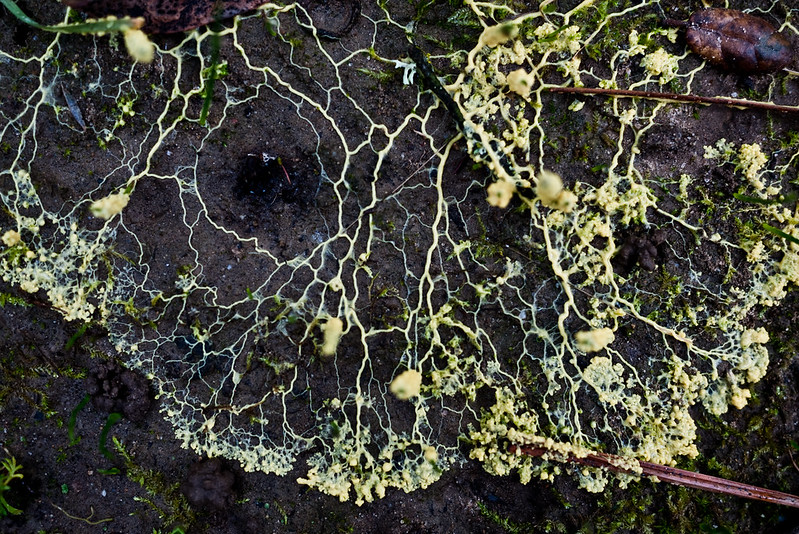
Physarum polycephalum is a bizarre organism of the slime mould type. It consists of a membrane within which several nuclei float, which is why it is considered an “acellular” being—neither monocellular nor multicellular. Despite its simple structure, it has some outstanding features: Physarum polycephalum can solve complex problems and move through space by expanding into “tentacles,” making it an exciting subject for scientific experiments.
The travelling salesman problem is the best known: it’s a computational problem that aims to optimise travel in a web of possible paths. Using a map, scientists at Hokkaido University placed a flake of oat, on which Physarum feeds, on the main junctions of Tokyo’s public transportation system. Left free to move around the map, Physarum expanded its tentacles, which, to the general amazement, quickly reproduced the actual public transport routes. The mechanism is very efficient: the tentacles stretch out in search of food; if they do not find any, they secrete a substance that will signal not to pursue that same route.
We are used to thinking of intelligence as embodied, centralised, and representation-based: Physarum teaches us that this is not always the case and that even the simplest organism can suggest new ways of thinking, acting and collaborating.
Putting Off the Catastrophe
If the end is nigh, why aren’t we managing to take global warming seriously? How can we overcome the apathy of our eternal present? The following article is taken from MEDUSA, an Italian newsletter that talks about climate and cultural changes. Edited by Matteo De Giuli and Nicolò Porcelluzzi in collaboration with NOT, it comes out every second Wednesday and you can register for it here. In 2021, MEDUSA also became a book.
There is no alternative was one of Margaret Thatcher’s slogans: wellbeing, services, economic growth… are goals achievable exclusively by doing things the free market way. 40 years on, in a world built on those very election promises, There is no alternative sounds more like a bleak statement of fact, a maxim curbing our collective imagination: there is no alternative to the system we’re living in. Even when we’re hit by crisis, in times of unrest, exploitation and inequality, the state of affairs finds us more or less defenceless. There’s no escape – or we can’t see it: our room for manoeuvre has been fenced off.
Why can’t we take global warming seriously? Because it’s one of those complex systems that operate, as Nick Srnicek and Alex Williams affirm in their Inventing the Future, “on temporal and spatial scales that go well beyond the bare perceptual capacities of the individual” and whose effects “are so widespread that it’s impossible to exactly collocate our experience within their context”. In short, the climate problem is also the result of a cognitive problem. We are lost in the corridors of a vast and complex building in which we see no direct and immediate reaction to anything we do and have no clear moral compass to help us find our way.
It was to pursue these issues further that I decided to read What We Think About When We Try Not to Think About Global Warming (hereafter WWTAWWTNTAGW) by Norwegian psychologist and economist Per Espen Stoknes, a book I’d been putting off reading for some time for a series of reasons that turned out to be only partially valid. First of all, there was my vaguely scientist prejudice: despite being interested in the issue, I find that the back cover of WWTAWWTNTAGW sounds more like front flap blurb for some self-help publication rather than for a serious work of popular science. I quote: “Stoknes shows how to retell the story of climate change and at the same time create positive, meaningful actions that can be supported even by negationists”. Then there was the title, WWTAWWTNTAGW, a cumbersome paraphrase of a title that is already, in itself, the most ferociously paraphrased in the history of world literature. And lastly — still on the surface only – there was the spectre of another book by Per Espen Stoknes, published in 2009, the mere cover of which I continue to find insurmountably cringeful: Money & Soul: A New Balance Between Finance and Feelings.
Laying aside, for the moment at least, the prejudices that kept me away from WWTAWWTNTAGW, I discovered a light-handed book that raises various interesting points. In short: why does climate change, our future, interest us so little? Why do we see it as such an abstract and remote problem? What are the cognitive barriers that are sedating, tranquillizing and preventing us from having even the slightest real fear for the fate of the planet? Stoknes identifies five, which can be summed up more or less as follows:
Distance. The climate problem is still remote for many of us, from various points of view. Floods, droughts, bushfires are increasingly frequent but still affect only a small part of the planet. The bigger impacts are still far off in time, a century or more.
Doom. Climate change is spoken of as an unavoidable disaster that will cause losses, costs and sacrifices: it is human instinct to avoid such matters. We are predictably averse to grief. Lack of practical solutions on offer exacerbates feelings of impotence, while messages of catastrophe backfire. We’ve been told that “the end is nigh” so many times that it no longer worries us.
Dissonance. When what we know (using fossil fuel energy contributes to global warming) comes into conflict with what we’re forced to do or what we end up doing anyway (driving, flying, eating beef), we feel cognitive dissonance. To shake this off, we are driven to challenge or underestimate the things we are sure about (facts) in order to be able to go about our daily lives with greater ease.
Denial. When we deny, ignore or avoid acknowledging certain disturbing facts that we know to be “true” about climate change, we are shielding ourselves against the fear and feelings of guilt that they generate, against attacks on our lifestyle. Denial is a self-defence mechanism and is different from ignorance, stupidity or lack of information.
Identity. We filter news through our personal and cultural identities. We look for information that endorses values and presuppositions already inside our minds. Cultural identity overwrites facts. If new information requires us to change ourselves, we probably won’t accept it. We balk at calls to change our personal identities.
There are obviously hundreds of other reasons why we still hold back from a strategy to mitigate climate change: economic interests, the slowness of diplomacy, conflicting development models, the United States, India, sheer egoism, “great derangement” and all the other things we’ve come to know so well over the years. But Per Espen Stoknes empirically suggests a way forward. Catastrophism and alarmism don’t work. We need to find a different tone to dispel the apathy of our eternal present.
Image: The Grosser Aletsch, 1900 Photoglob Wehrli © Zentralbibliothek Zürich, Graphische Sammlung und Fotoarchiv/ 2021 Fabiano Ventura – © Associazione Macromicro.
press
Discussion about the exhibition d’une chose à l’autre in Liddes
Rhône FM, Good morning Valais, 25/06/2026
The Collectif Facteur and least
Le Nouvelliste, 24/06/2026
Sourdough, fleas, and reggae in troubled waters
Grrif, 10/08/25
Interview with Véronique Ferrero Delacoste about d’un champ à l’autre / von Feld zu Feld
Rhône FM, Good morning Valais, 08/05/2025
Diskussion und Wanderung im Saflischtal
Pomona, 07/08/2025
From field to field: providing space for exchange and conversation
Walliser Zeitung, 07/24/2025
An artistic participatory project
Park Info n.41, April 2025